Pillow construction and care
Inside Natural-Fill Pillows: Loft, Adjustability, and Care Compared
A pillow’s comfort is not simply a matter of what goes inside it. The arrangement of its filling, the way that filling responds to pressure, and the care the pillow can tolerate all shape how it feels night after night. With natural-wool pillows, two common approaches—adjustable loose fill and enclosed layers of batting—offer different routes to loft and support.
Published November 9, 2026
In the quiet arithmetic of a bed, the pillow is a small object with an outsized job. It must yield without disappearing, hold its shape without feeling rigid, and remain comfortable through hours of pressure and changes in sleeping position. Yet two pillows that use wool can behave quite differently. Their feel depends not only on the fiber, but on how it has been prepared, enclosed, arranged, and maintained.
That is why construction deserves attention alongside material. An adjustable pillow lets its owner alter the amount of filling, typically through an access opening. A layered-batting pillow takes another path: wool is arranged in sheets or layers inside a case, offering a more defined structure. Each design has practical consequences for pillow loft, customization, care, and the likelihood that the filling will settle with use.
Obasan and Healthy Choice provide useful examples of these contrasting ideas. The Obasan organic wool pillow uses wool knops in an adjustable core. The Healthy Choice organic wool pillow is described as a handmade, non-adjustable pillow with wool batting and an organic cotton sateen cover. Neither construction is automatically right for everyone. The better choice depends on what a sleeper needs from a pillow—and how much involvement they want in keeping it comfortable.
Loft is a starting point, not a verdict
Loft refers to a pillow’s height or thickness when it is resting under ordinary conditions. It is an important part of fit, but a number or visual impression cannot tell the entire story. Filling compresses under the head; the amount and speed of that compression affect how the pillow feels in use. Cover fabric, fill distribution, and the sleeper’s position all influence the result.
A higher-loft pillow may suit someone who needs more space between the head and mattress, while a lower profile may feel more natural to someone who prefers less lift. Sleeping position can be one consideration, but it is not a universal formula: shoulder width, mattress firmness, body proportions, and personal comfort matter, too. A pillow that feels supportive in a shop may compress differently after a full night, and preferences can change over time.
Wool’s resilience gives it a distinctive feel compared with some loose synthetic fills. Wool fibers can spring back after compression, but a pillow’s overall loft depends on its construction and filling quantity. A natural-fill label alone does not establish firmness, height, or suitability. Those details are best assessed through the product’s stated dimensions, fill design, and, when possible, a return or trial policy.
It is also helpful to separate loft from support. Loft describes height; support describes how well the pillow maintains a comfortable position under load. A pillow can feel lofty at first and compress substantially, or have a modest profile while still feeling stable. The interaction matters more than either characteristic in isolation.
Adjustable fill: the case for fine-tuning
An adjustable pillow offers a direct way to change its loft. In the Obasan design, the wool core can be opened so filling may be removed or added. That access gives the sleeper a degree of control unavailable in a permanently sealed pillow. If the pillow feels too full, some wool can be taken out; if it feels too low, the removed material can be returned or additional fill used when available.
The advantage is practical, not magical. Adjustment can help a pillow better reflect an individual preference, but it takes experimentation. A large change made all at once may overshoot the desired feel. Small adjustments, followed by a few nights of use, make it easier to understand whether the altered height is more comfortable. It can also be useful to keep removed filling in a clean, dry, sealed container, clearly marked and stored away from moisture and pests.
Adjustability may be especially appealing when a sleeper is uncertain about preferred loft or expects those preferences to evolve. It can also make a pillow more adaptable across different users, though a shared pillow still requires one person’s comfort to take priority at a given time. Access to the fill does not necessarily mean every aspect of the pillow can be changed: the cover, fill type, and overall dimensions remain part of its design.
There is a trade-off. Opening a wool core can be messy, and loose fibers may be awkward to manage indoors. Obasan’s care guidance suggests doing the adjustment over a sink with the drain plug in place or outside. A clean work surface, careful handling, and a plan for the removed wool can make the process more orderly. Anyone sensitive to loose fibers should take appropriate precautions and follow the manufacturer’s guidance.
For a closer look at the construction, see the Obasan Organic Wool Pillow. Its adjustable core is the defining point for this comparison; it does not, by itself, promise a particular sleep outcome. Comfort remains personal and depends on the complete fit between pillow, sleeper, and mattress.
Layered batting: a more contained structure
Layered batting presents a different proposition. Rather than opening a core to add or remove loose wool, this design places wool in organized layers within the pillow. The result is a contained construction with a more prescribed starting shape. It may appeal to sleepers who want a pillow that is ready to use without adjusting fill or handling loose material.
The Healthy Choice Organic Wool Pillow is described as filled with GOTS-certified Argentinian wool batting and covered in GOTS-certified organic cotton sateen. It is explicitly not adjustable. That distinction is more useful than treating “natural wool” as a complete specification: the pillow has a defined construction and care approach, rather than an interior the owner can reconfigure.
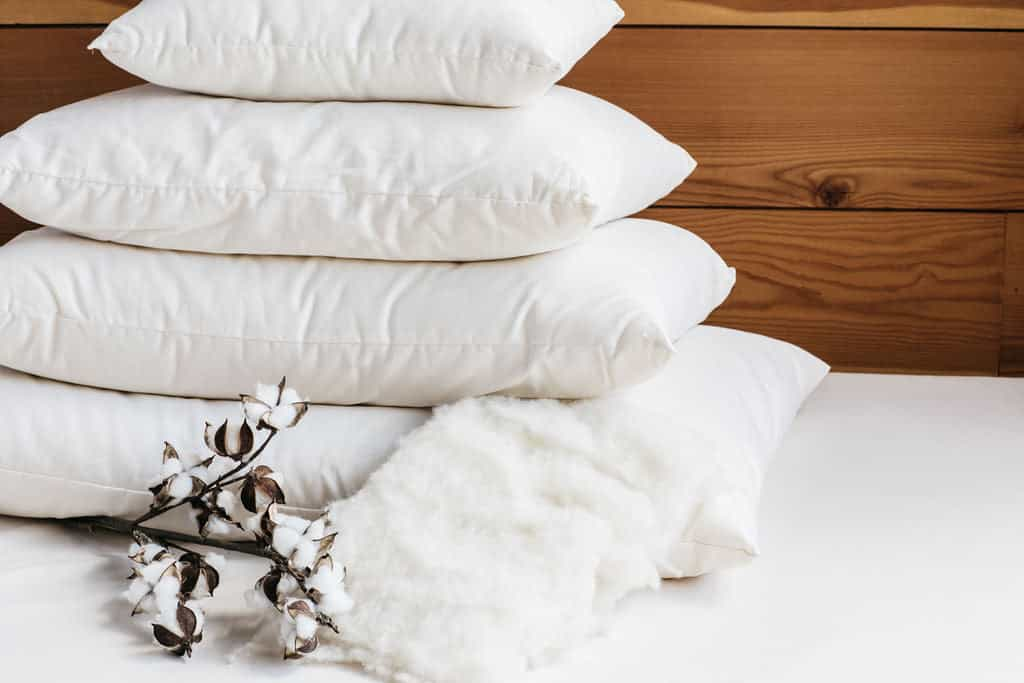
A related example of layered construction is the Certified Organic Wool Bed Pillows, which use layered wool batting in an organic cotton sateen case. The product information notes that layers can settle during regular use. That is a useful reminder that batting is not immune to change. A layered pillow can soften or shift in feel over time, even though it does not contain loose fill for the owner to redistribute.
The appeal of this construction is simplicity: no opening, no measuring, and no loose wool to put away after an adjustment. The limitation is equally clear. If the height or feel is not a good match, the sleeper cannot correct it by removing or adding filling. The initial loft and firmness therefore deserve particular attention before choosing a non-adjustable model.
Layered batting does not necessarily mean a pillow is firm, nor does adjustability guarantee a soft result. Those impressions depend on fill quantity, batting density, cover dimensions, and other design choices. When available, look for explicit descriptions of thickness, fill weight, and whether the manufacturer expects the layers to settle. If those details are missing, asking the seller may be more helpful than drawing conclusions from material alone.
Obasan and Healthy Choice: what the comparison reveals
The useful contrast between Obasan and Healthy Choice is not a contest with one universal winner. It is a comparison of two approaches to managing loft. Obasan makes adjustment part of the pillow’s design; the Healthy Choice pillow offers a fixed construction and asks the sleeper to choose its starting profile with care.
| Consideration | Obasan organic wool pillow | Healthy Choice organic wool pillow |
|---|---|---|
| Construction | Wool knops in an adjustable core | Wool batting in a fixed, non-adjustable design |
| Loft changes | Owner can add or remove fill | Loft cannot be changed by accessing the fill |
| Cover | Two-sided cotton cover, as described by the product information | GOTS-certified organic cotton sateen cover |
| Routine care | Use a pillowcase and air the pillow seasonally; wool core is not washable | Use a pillow protector; spot clean only and avoid direct heat |
| Best match for | Someone who values the option to fine-tune fill and loft | Someone who prefers a contained, ready-made construction |
These descriptions point to different kinds of convenience. Adjustable fill offers control after purchase, but requires effort and careful handling. A fixed pillow avoids that process, but places more importance on choosing a suitable height from the outset. Neither option eliminates maintenance. Both benefit from protection against everyday soil, and both have care limits that should be respected.
The cover is part of the pillow
It is easy to focus on the filling and overlook the cover. Yet the case sits closest to the skin, helps contain the wool, and affects how easily the pillow can be maintained. Cotton percale, sateen, jersey, and other weaves can differ in texture and drape. A cover’s construction also matters when the pillow is adjusted: a secure closure and durable seams help keep the interior where it belongs.
The Obasan pillow is described as having one side of silky organic cotton and another of soft cotton jersey, allowing the user to flip between two surfaces. That may offer a tactile choice, but it is not a substitute for checking the care instructions. The wool core should not be washed. The Healthy Choice pillow uses an organic cotton sateen cover; its care directions call for spot cleaning rather than washing the pillow.
A removable cover is not automatically washable, and a washable outer case does not mean the filled pillow can be laundered. Before cleaning, identify exactly which part is designed to be removed. If the cover is attached, or if instructions are unclear, avoid assuming that a washing machine is safe for the whole item.
Care that protects the loft
Wool pillows often call for less aggressive cleaning than everyday cotton bedding. Their care instructions vary by product, and that variation matters. Obasan’s guidance says not to wash the wool core; it recommends keeping the pillow covered, airing it seasonally, and using baking soda to address odors. The Healthy Choice pillow is listed as spot clean only, with advice to protect it using a pillow protector and keep it away from direct sunlight or a direct heat source.
These are product-specific directions, not a universal wool-care rule. Some wool-filled products are advertised as washable, while others are not. A pillow’s cover, batting, stitching, and fill preparation can all affect what it can tolerate. Read the label and manufacturer instructions before applying any cleaning method, especially before using water, detergent, heat, or mechanical agitation.
- Use a pillowcase or protector. A washable outer layer can help reduce the amount of soil reaching the pillow itself. Launder that layer according to its own instructions.
- Address small marks carefully. For a spot-clean-only pillow, use the method recommended by its manufacturer. Avoid saturating the filling; moisture trapped inside can take a long time to dry.
- Let air circulate. Seasonal airing can refresh a pillow, but avoid prolonged exposure to intense direct heat or sunlight when the product instructions advise against it.
- Allow complete drying. If any part of a pillow becomes damp, make sure it is thoroughly dry before covering and using it again. Follow the product’s drying guidance rather than improvising with high heat.
- Store thoughtfully. When not in use, keep a clean, dry pillow in a breathable storage place. For long-term storage, follow the manufacturer’s directions and take reasonable steps to prevent moisture and pests.
For an adjustable design, care also includes managing any removed filling. Keep it clean and dry, and avoid setting it on dusty or damp surfaces. For a layered design, do not assume that a settled feel can be corrected by opening the pillow; if the construction is not adjustable, consult the maker before attempting repair.
A practical way to choose
Start with the position in which you spend most of the night, but do not treat it as the only answer. Notice whether your current pillow feels too high, too low, or comfortable at first but compressed by morning. Consider how much space your head and neck need in relation to your mattress and shoulder position. A pillow that keeps the head comfortably aligned is more useful than one chosen solely for a lofty appearance.
Then ask how much customization you want. If you enjoy making small changes and are comfortable handling loose wool, an adjustable pillow may be appealing. If you would rather avoid opening a pillow and prefer a contained construction, a fixed layered or batting design may better fit your routine. Neither preference is more sophisticated; the right design is the one you will use comfortably and maintain correctly.
Finally, examine the care commitment. A pillow that is spot clean only may suit someone who regularly uses a protector and is content to refresh it through airing. It may be less convenient for households that need frequent full washing. Confirm whether a cover can be removed, what the fill is made from, whether the loft is adjustable, and what the maker says about washing and drying.
When comparing descriptions, look for specifics instead of relying on broad claims. “Wool-filled” does not tell you whether the fill is loose, layered, or quilted in place. “Supportive” does not state a measurable loft. “Natural” does not explain whether the pillow can be washed. Good product information should make these distinctions plain; when it does not, those are reasonable questions to ask before buying.
The long view: comfort is a relationship
A pillow is not a static object. Its feel is shaped by use, upkeep, and the sleeper’s own habits. Wool batting may settle, covers may soften, and an adjustable fill may be changed as preferences become clearer. That does not mean a pillow should be constantly reworked. It means the initial impression is only one part of the decision.
For readers comparing natural-fill pillows, the central distinction is straightforward. Adjustable construction offers a lever: the ability to change loft by changing the amount of fill. Layered batting offers a more contained arrangement, with fewer adjustments for the owner and a more fixed starting point. Care follows from those designs. Loose fill must be handled thoughtfully; enclosed batting still needs protection, airing, and cleaning within its stated limits.
In the end, the best pillow is not the one with the most elaborate description. It is the one whose height, response, and maintenance demands suit the person sleeping on it. Understand the construction, check the care label, and give the pillow time to reveal how it behaves under real use. That modest investigation can turn a bedding purchase from a guess into a better-informed choice.
Frequently asked questions
What does an adjustable wool pillow mean?
An adjustable wool pillow has an opening that allows the owner to remove or add filling, changing the pillow’s loft. The adjustment process can involve loose fibers, so follow the maker’s directions and work in a clean area.
Can a layered wool pillow be adjusted?
Not necessarily. A layered-batting pillow may have wool arranged inside its case without an access point for changing the fill. Check the specific construction; some layered pillows are fixed, while other designs may offer different options.
Can I machine wash a wool pillow?
Do not assume so. Care instructions differ from pillow to pillow, and some wool cores should not be washed at all. Follow the manufacturer’s directions for the exact product, including guidance on spot cleaning, airing, and drying.
Which is better: Obasan or Healthy Choice?
The designs suit different priorities. Obasan’s pillow is adjustable, while the Healthy Choice organic wool pillow is described as non-adjustable and spot clean only. Consider preferred loft, willingness to handle fill, cover details, and the care routine before deciding.